
Bosnia Fuel Stations Guide for Road Travelers
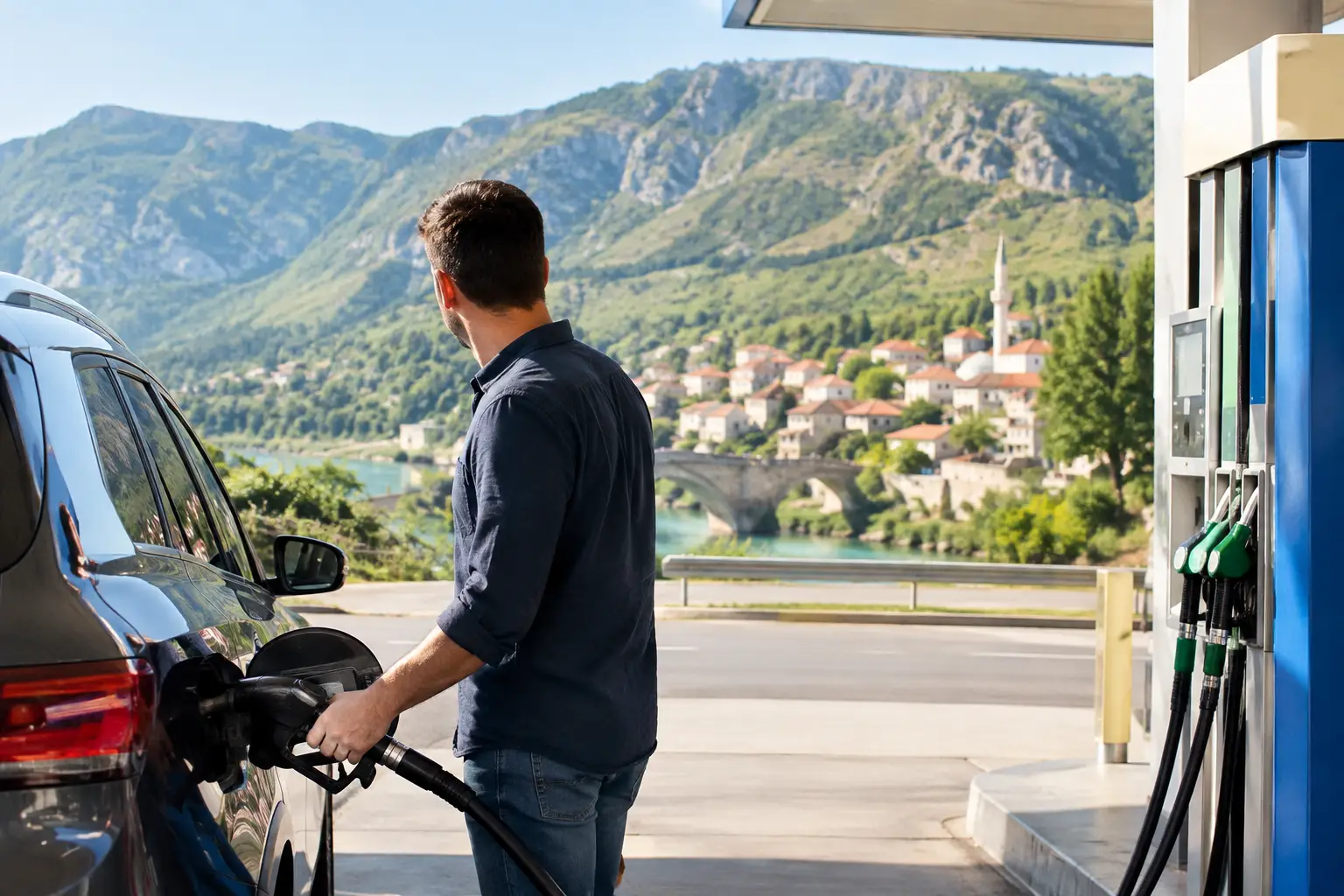
A day that starts with coffee in Mostar can easily include the turquoise spring at Blagaj, the stone lanes of Počitelj, and an afternoon swim near Kravica Waterfalls. That freedom is a major advantage of renting a car, but it works best when refueling is simple and stress-free. This Bosnia fuel stations guide covers what drivers need to know before heading out.
Fuel stations are widely available on major roads and around cities, although distances between them can feel longer once you leave the main routes. A little planning is especially useful for travelers driving through Herzegovina, taking mountain roads, or returning a rental vehicle for an early airport departure.
Bosnia fuel stations guide: what to expect
Most fuel stations in Bosnia and Herzegovina are straightforward to use. You will generally find a covered forecourt, several pumps, a small shop, restrooms, and a cashier counter inside. Larger locations on busy highways and city approaches may also have coffee, snacks, basic car supplies, and a place to take a short break.
Fuel is usually priced per liter, and payment is made in convertible marks, shown as KM or BAM. Cards are accepted at many established stations, particularly in cities and on major travel routes. Still, carrying some local cash is sensible. A card terminal may occasionally be unavailable, and cash is useful for small purchases or stations in quieter areas.
Some locations are self-service, while others have an attendant who can assist at the pump. If an attendant is present, simply state the fuel type and the amount you would like. For a full tank, saying “full” is normally understood, but checking the displayed amount before paying is always good practice.
Choose the fuel listed in your rental agreement
The most important rule is simple: use the exact fuel specified for your vehicle. Your rental agreement and the fuel cap should clearly indicate whether the car takes gasoline or diesel. Do not rely on what you usually drive at home, especially if you are renting a different vehicle type for your Balkan trip.
At the pump, you will commonly see gasoline labeled as Eurosuper 95 or 95. Higher-octane gasoline, often marked 98 or 100, may also be available. Diesel is commonly labeled Eurodiesel or Diesel. LPG can be found at selected stations, but it is not available everywhere and should only be used in a vehicle designed for it.
If you are uncertain, pause before fueling. Check the fuel cap, rental documents, or ask the station attendant to confirm the correct choice. Adding the wrong fuel can cause serious engine damage and disrupt an otherwise well-planned trip. A few seconds of checking is far easier than arranging roadside support.
Fuel amounts and practical costs
Fuel prices can change, so it is better to plan around fuel level than assume a fixed trip cost. For most day trips from Mostar, an economy car or compact sedan will not require frequent refueling if it starts with a full tank. That said, mountain driving, air conditioning, a fully loaded vehicle, and stop-and-go traffic can all increase consumption.
Before setting out, look at the route rather than just the mileage. A drive with steep climbs and winding roads may use more fuel than the same distance on a flatter main road. This matters for families in a van, travelers carrying several suitcases, or visitors choosing an SUV for added space and comfort.
When to fill up on trips from Mostar
For popular nearby excursions, filling up before leaving Mostar is often the easiest option. It gives you more choice, avoids stopping during a busy sightseeing day, and leaves you free to take detours when you spot a viewpoint, vineyard, or village worth visiting.
Blagaj is close enough that fuel is rarely a concern, but a full tank still gives you the flexibility to continue toward Stolac or return by a different road. For Kravica Waterfalls and Počitelj, it is wise not to wait until the warning light appears. Stations exist along the main corridors, yet they may not be exactly where you need one when you are ready to leave.
Travelers heading farther toward Livno, the mountains around Jablanica, or less populated parts of Herzegovina should refuel earlier rather than later. The same applies if you plan to drive after dark. Main roads are generally easier to manage than remote routes, but having a comfortable fuel reserve removes unnecessary pressure.
A practical habit is to refill once the tank reaches around one-quarter, especially outside larger cities. This is not because every route lacks stations. It is simply a reliable travel routine when you do not know the area, are traveling with children, or have a timed reservation to meet.
Opening hours, restrooms, and roadside breaks
Many urban and major-road fuel stations operate late, and some larger sites are open around the clock. Smaller stations may have more limited hours, particularly on quieter local roads. Do not assume that every station is open overnight or on a holiday, even if it appears on your navigation map.
Fuel stations can make practical rest stops during a self-drive day. Larger ones often offer coffee, cold drinks, packaged food, and clean restrooms, though restroom standards can vary by location. Buying fuel or something small from the shop is a considerate approach when using facilities.
For travelers who prefer a relaxed schedule, this is one of the quiet benefits of having your own rental car. You can stop when the group needs a bathroom break, when children need a snack, or when you want coffee before the next section of road. Public buses and organized tours run on their own timetable. A car lets your day follow yours.
Paying at Bosnia and Herzegovina fuel stations
At many stations, you fill first and then go inside to pay. Remember the pump number before walking to the cashier. In some cases, especially with assistance at the pump, you may tell the attendant a set amount in advance.
International debit and credit cards are commonly accepted, but it depends on the station and its payment equipment. Choose local currency if a payment terminal asks whether to charge you in KM or your home currency. The local-currency option often avoids less favorable conversion handling, although your card provider’s terms will still apply.
Keep the receipt until the end of the day. It is useful for personal travel records and can help if you need to check a card charge. If you are on a business trip, receipts also make expense reporting much easier.
Refueling before returning your rental car
Your required return fuel level depends on the rental terms you selected. Check the agreement before the final day, rather than trying to remember it while navigating to the drop-off point. If the vehicle was provided with a full tank and must be returned full, allow enough time to refuel close to your return location.
Do not leave the final refill until the last possible minute. Airport roads, unfamiliar traffic patterns, and a busy station can all add time. Refuel, keep the receipt, and then drive directly to the agreed return point when possible. This makes the handover quicker and gives you one less detail to manage before a flight or onward journey.
If you are crossing borders during a longer Balkan itinerary, confirm the vehicle’s fuel level before leaving Bosnia and Herzegovina. Fuel availability is not usually a problem on principal routes, but local pricing, road conditions, and your next planned stop may make filling up beforehand the more convenient choice. CityRent can help travelers select a vehicle and rental arrangement that suits a multi-stop trip, whether that means a compact automatic, family wagon, or spacious van.
A few habits that prevent problems
Keep your fuel receipt, avoid running the tank too low, and check the pump label every time. These small steps are particularly valuable when you are tired after a long drive or switching between countries where labels may look slightly different.
Also take a moment to park safely while paying. Bosnia and Herzegovina’s stations can be busy around weekends, holidays, and summer travel periods. Follow the marked traffic flow, watch for pedestrians near the shop entrance, and move the car after fueling if others are waiting for the pump.
The best road trips leave room for an unplanned stop: a riverside lunch, a hillside viewpoint, or another hour at the waterfalls. Start with the right fuel, keep a comfortable reserve, and the road from Mostar stays open to whatever the day brings.