
10 Best Cars for Mountain Roads in the Balkans
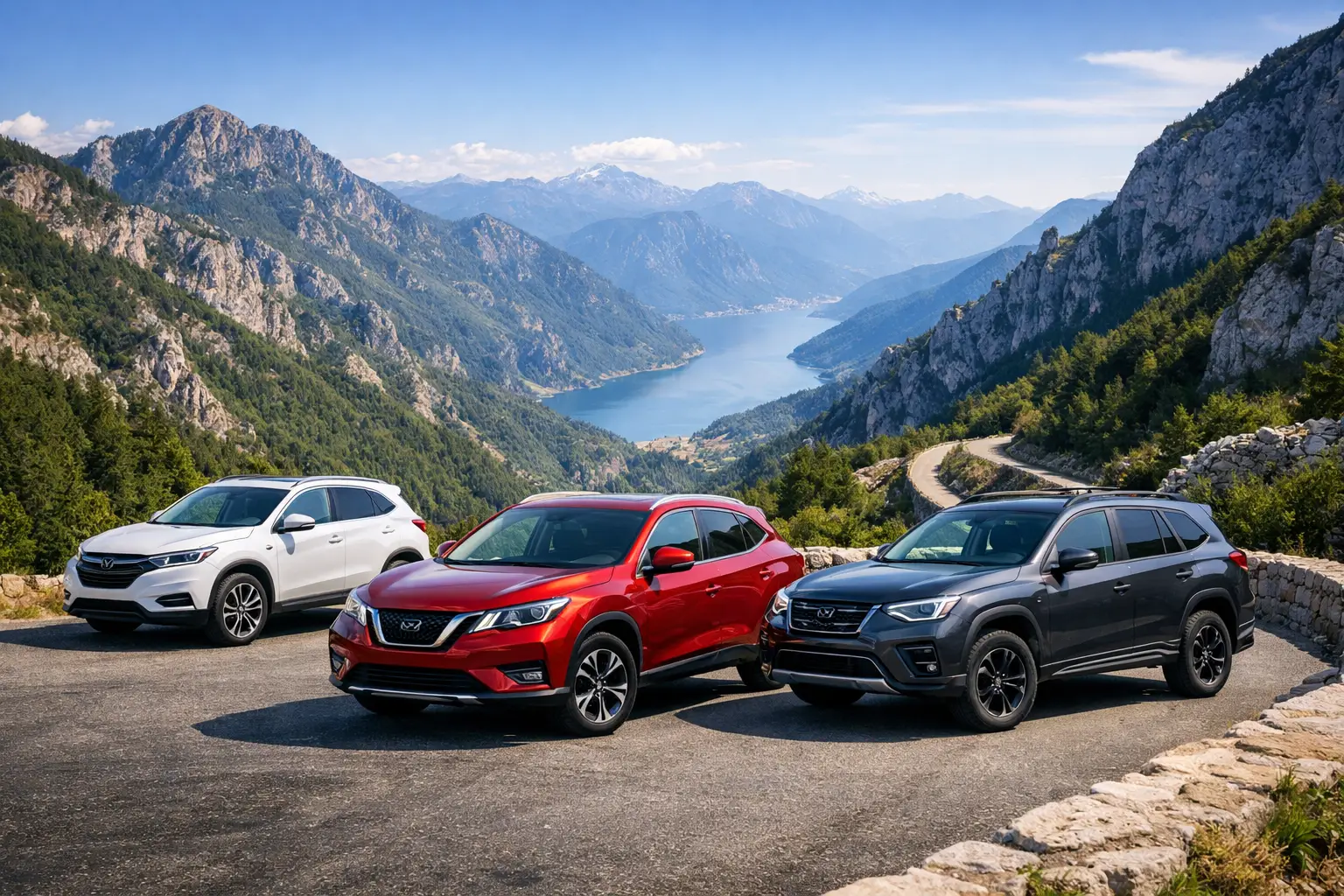
A road that looks short on a map can feel very different once it begins to climb. Around Mostar and across the Balkans, mountain routes often bring steep grades, tight bends, uneven pavement, changing weather, and views worth stopping for. The best cars for mountain roads are not always the biggest or most expensive ones. They are the vehicles that match your passengers, luggage, route, and confidence behind the wheel.
For a day trip to Kravica Waterfalls, Blagaj, or Počitelj, a comfortable compact or sedan may be all you need. For higher routes, winter travel, or a family itinerary that includes remote viewpoints, an SUV can provide extra ground clearance, space, and reassurance. Choosing well before you set off makes the drive safer and the day far more enjoyable.
What Makes a Car Good on Mountain Roads?
Mountain driving is about control more than speed. A suitable rental should have responsive steering, dependable brakes, good tire condition, and enough engine power to climb without feeling strained. Automatic transmission can also make a long day on winding roads more relaxed, especially for visitors who do not regularly drive manual vehicles.
Size matters, but bigger is not automatically better. Narrow village lanes and parking areas can favor a compact car, while a larger SUV is useful when traveling with children, several bags, or sports equipment. The best choice sits comfortably between the space you need and the roads you plan to drive.
Visibility is another practical advantage. A higher seating position can help on curving routes and at scenic pull-offs, while a smaller vehicle may be easier to place accurately on a narrow lane. There is no single perfect vehicle for every Balkan road. The right answer depends on the journey.
The Best Cars for Mountain Roads by Travel Style
1. Compact automatic cars for couples and light day trips
A compact automatic is often the most sensible option for two travelers carrying light luggage. These cars are easy to park in historic towns, economical on longer drives, and comfortable enough for paved routes around Herzegovina. They work particularly well for travelers who want the freedom to leave Mostar early, stop wherever they like, and return on their own schedule.
For trips to Blagaj, Počitelj, and Kravica Waterfalls, a compact car offers a good balance of value and convenience. It is also a practical choice for first-time visitors who prefer a vehicle that feels manageable on unfamiliar roads. Choose this category when your route is mostly paved and you do not need a large cargo area.
The trade-off is limited room. Four adults with full-size suitcases may find a compact car too tight, and it will not offer the elevated driving position or extra clearance of an SUV.
2. Mid-size sedans for comfort on longer drives
A mid-size sedan is a strong choice for couples, business travelers, or small families planning several hours on the road. It usually provides more legroom, a larger trunk, and a more settled ride than an economy car. On smooth but winding paved roads, that added comfort can make a noticeable difference.
Sedans suit itineraries that combine city driving with longer routes toward Sarajevo, the Adriatic coast, or Montenegro. An automatic sedan is especially convenient when traffic, hills, and frequent stops are part of the day. It provides a calmer experience without moving into a larger vehicle category than many travelers need.
The limitation is ground clearance. A sedan is ideal for maintained roads, but it is not the first choice for rough tracks, loose surfaces, or access roads that are clearly uneven.
3. SUVs for steep routes, families, and extra confidence
For many visitors, an SUV is the easiest recommendation for mountain-focused travel. It provides more luggage space, a higher driving position, and additional room for families or groups of three to five people. That combination is useful when the road includes climbs, bends, changing pavement, and a full day of sightseeing.
An SUV is a practical fit for travelers who want flexibility rather than a tightly planned tour schedule. You can leave early for a waterfall, pause for lunch in a small town, take a scenic detour, and still travel in comfort. It is also a better match for travelers carrying strollers, several suitcases, or outdoor gear.
However, an SUV is still not a license to drive beyond road conditions. Its larger size can be less convenient in tight old-town streets, and it may use more fuel than a compact vehicle. If your plans are limited to well-maintained roads and you are traveling light, the extra capacity may not be necessary.
4. All-wheel-drive vehicles for winter or remote roads
All-wheel drive can be valuable when weather and terrain become less predictable. If your trip includes higher elevations in colder months, rain-soaked roads, or rural routes where surface conditions vary, it can offer additional traction and peace of mind.
That said, all-wheel drive does not replace careful driving. Proper tires, reduced speed, safe following distance, and attention to weather reports matter more than any single feature. Before traveling in winter, ask about the vehicle's seasonal equipment and make sure your route is appropriate for current conditions.
For a summer visit focused on Mostar's nearby attractions, all-wheel drive is usually optional rather than essential. For a winter road trip through mountain regions, it can be a worthwhile priority.
5. Station wagons for luggage-heavy road trips
Station wagons are an excellent middle ground for travelers who need cargo room but prefer the road handling and fuel economy of a passenger car. They work well for a family of four, a couple traveling with substantial luggage, or visitors combining several destinations in one trip.
The long rear cargo area makes packing easier than in many sedans, and the lower profile can feel more car-like than an SUV on paved curves. This is a particularly sensible option for airport arrivals followed by a multi-stop Balkan itinerary.
As with sedans, the main consideration is clearance. A station wagon is best for paved mountain roads and established destinations, not rough access tracks.
6. Vans for families and small groups
A van makes sense when the vehicle needs to carry people first and luggage second. For a family reunion, a group of friends, or travelers arriving with several large bags, a multi-passenger vehicle avoids the inconvenience of splitting into separate cars.
On open roads, a modern van can be very comfortable. On narrow mountain sections, it requires more patience, wider turns, and thoughtful parking. It is best for groups that value traveling together and have a route based on main roads rather than very tight village lanes.
Features Worth Prioritizing Before You Book
Transmission is one of the first decisions to make. If you are not fully comfortable starting on a hill with a manual vehicle, select an automatic. Mountain roads ask for enough attention already, and an automatic can reduce fatigue during a long sightseeing day.
Air conditioning is equally important in the warmer months. Herzegovina can be hot, even when your route passes through cooler higher areas later in the day. Good climate control helps everyone arrive less tired, particularly children and older passengers.
For mountain trips, look for a vehicle with enough trunk space for your actual bags, not just the number of seats you need. A five-seat car may technically carry five adults, but it may not comfortably hold five travelers and their suitcases. When in doubt, move up one category.
Navigation support through your phone can be useful, but do not rely on it blindly. Download maps before leaving built-up areas, keep your phone charged, and allow extra time for viewpoints, slow-moving traffic, and unplanned stops. A car gives you flexibility, but good preparation keeps that flexibility enjoyable.
Drive Mountain Roads With More Margin
The safest mountain-driving habit is simple: give yourself more time than you think you need. Avoid trying to cover too many places in one day, especially if you are unfamiliar with the area. A relaxed itinerary lets you take curves smoothly, stop when needed, and enjoy the landscape instead of chasing the clock.
Use lower speeds on descents, stay in your lane on blind corners, and watch for cyclists, pedestrians, livestock, and local vehicles. Conditions can change quickly after rain or near shaded sections of road. If a route appears unsuitable for your vehicle or experience level, turn around and choose a better-maintained alternative.
With the right rental, a mountain drive becomes part of the trip rather than the distance between attractions. Choose a vehicle that fits the people and plans in your car, leave room for detours, and let the road set a comfortable pace.