
Bosnia Road Conditions: What Drivers Should Expect
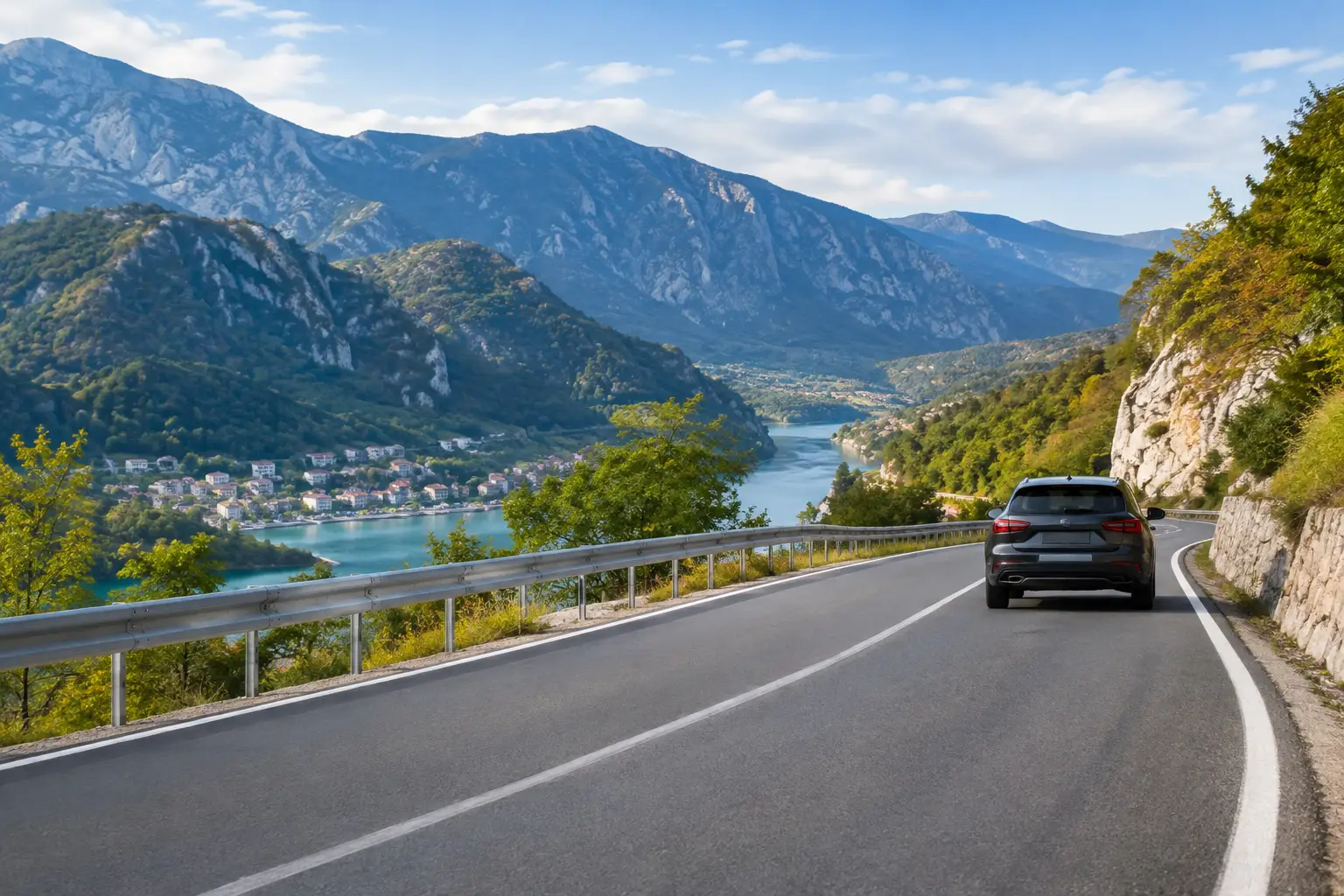
A drive from Mostar to Blagaj can feel effortless, while a short detour into the hills may bring tight bends, changing surfaces, and slow-moving local traffic. That contrast is the key to understanding Bosnia road conditions: the main routes are often very manageable, but travel times can be longer than a map suggests.
For travelers, a rental car offers the freedom to set a comfortable pace. You can leave Mostar early for Kravica Waterfalls, stop in Počitelj when the light is right, and spend as long as you like beside the Buna River in Blagaj - without working around a tour timetable or limited bus connections.
Bosnia Road Conditions by Route Type
Bosnia and Herzegovina has a mixed road network. Major highways and primary roads connect the larger cities well, while regional and mountain roads demand more patience and attention. Road quality can change noticeably within the same day, especially when an itinerary combines cities, rural villages, and nature destinations.
Highways and main intercity roads
The country’s motorway sections are generally the easiest roads to drive. They are modern, clearly marked, and useful for longer journeys between major destinations. Tolls are collected at toll booths, so keep a payment card and some local currency available. Traffic is usually lighter than on many Western European highways, though congestion can build near cities, border crossings, and popular summer routes.
Primary roads are also suitable for most travelers. The route between Mostar and Sarajevo, for example, is scenic and heavily used, but it includes curves, tunnels, and sections where overtaking is limited. It is a comfortable drive when taken steadily, not a route to rush.
Local, rural, and mountain roads
Smaller roads are where conditions vary most. Many are paved and perfectly usable in a standard car, but they can be narrow, uneven, or without a center line. Expect sharp turns, blind corners, limited lighting, and occasional road repairs. In rural areas, it is normal to encounter tractors, livestock, cyclists, and pedestrians on or close to the road.
A compact or midsize sedan is usually enough for popular sightseeing routes around Mostar. An SUV can be a better choice for travelers carrying a lot of luggage, visiting more remote areas, or driving during colder months. A four-wheel-drive vehicle is not necessary for standard tourist routes, but it can add confidence when weather and terrain are less predictable.
What Affects Bosnia Road Conditions Most
Weather has a real effect on driving, particularly outside the cities. Summers can be hot and dry in Herzegovina, while central and northern areas may see heavy rain, fog, snow, and ice depending on the season.
In summer, the roads around Mostar, Blagaj, Počitelj, and Kravica Waterfalls are usually dry and easy to navigate. The main concerns are heat, bright sun, tourist traffic, and the temptation to underestimate a winding road because the distance looks short. Carry water, keep your fuel level comfortable, and allow extra time for stops and parking.
Autumn and spring can bring sudden rain. Wet pavement is especially slippery after a long dry period, and water may collect on poorly drained sections of local roads. Slow down before bends rather than braking hard mid-corner.
Winter driving requires the most preparation. Snow and ice are common in higher elevations and on routes toward Sarajevo and the interior. Winter equipment rules apply during the designated seasonal period, typically from November 1 through April 1, and requirements can change, so confirm current rules before your trip. If snow is forecast, choose a suitable vehicle, check the route before leaving, and avoid treating a mountain drive as a fixed appointment.
Drive for the Road, Not the Map Time
Navigation apps are useful, but their arrival estimates can be optimistic on Bosnia’s curving regional roads. A 30-mile route may involve a pass, a village, construction traffic, or a slow truck that cannot be safely passed for several miles.
Build flexibility into your day, particularly when planning airport returns, border crossings, or timed activities. For a relaxed sightseeing day from Mostar, it is often better to choose two or three places and enjoy them properly than try to cover every attraction on a tight schedule.
For example, Blagaj, Počitelj, and Kravica Waterfalls can make an excellent self-drive day. They are close enough to combine, yet each rewards time on foot. With a car, you can arrive before larger groups, pause for lunch where you prefer, and return to Mostar when it suits your plans.
Rules and Habits That Make Driving Easier
Road signs follow familiar European conventions, and speed limits are posted in kilometers per hour. As a general guide, limits are commonly lower in towns, higher on open roads, and highest on motorways, but signs always take priority. Cameras and police checks are common enough that it is best to drive conservatively rather than assume a quiet road has no enforcement.
Seat belts are required, headlights should be used during the day, and phone use while driving is restricted unless you have a hands-free system. Never drink and drive. These are simple habits, but they matter when roads are unfamiliar and conditions can change quickly.
Use particular care when overtaking. Some roads have long stretches behind trucks or buses, and impatience is one of the biggest avoidable risks. Wait for a clear, legal section with full visibility. Arriving 10 minutes later is always preferable to forcing a maneuver on a blind bend.
Fuel stations are easy to find along main routes and near towns, but they are less frequent in remote areas. Fill up before heading deep into the mountains or starting a long evening drive. It is also wise to download offline maps in advance, since mobile coverage can drop in valleys and rural areas.
Parking Around Mostar and Nearby Attractions
Parking is usually straightforward compared with larger European cities, but location and timing matter. In central Mostar, spaces near the Old Bridge area can fill quickly during the main visitor hours. Paid lots are often the simplest choice, especially if you prefer a short walk over circling narrow streets.
At Blagaj and Počitelj, parking is generally available close to the main sights, although summer weekends can be busy. Kravica Waterfalls has designated visitor parking, and arriving earlier in the day usually makes the experience easier from the road onward. Do not leave valuables visible in the vehicle, even for a short stop.
When parking on local streets, watch for signs, marked zones, and driveways. Avoid blocking narrow lanes or access points - in older villages, a road that looks quiet may be the only practical route for residents, deliveries, or emergency vehicles.
Border Trips Need a Little Extra Planning
One of the advantages of renting a car in Bosnia and Herzegovina is the option to continue toward Croatia, Montenegro, or other nearby Balkan destinations. However, cross-border travel should be arranged before departure. Rental authorization, insurance documentation, and vehicle paperwork may be required at the border.
Border wait times also vary by season and time of day. Summer weekends, public holidays, and routes near the Adriatic can be particularly busy. Keep travel documents accessible, allow a time buffer, and never assume a short map distance means a quick crossing.
If your plans include neighboring countries, let CityRent know when booking so the vehicle and paperwork are prepared for the route you intend to take.
A Comfortable Way to Experience the Country
Bosnia’s roads reward travelers who leave room for the unexpected: a viewpoint above the Neretva, a roadside fruit stand, or a quiet stop in a stone village that was not part of the original plan. Choose a vehicle that fits your passengers and luggage, check conditions before longer drives, and give yourself enough time to enjoy the road as much as the destination.