
7 Best Cars for Balkan Roads
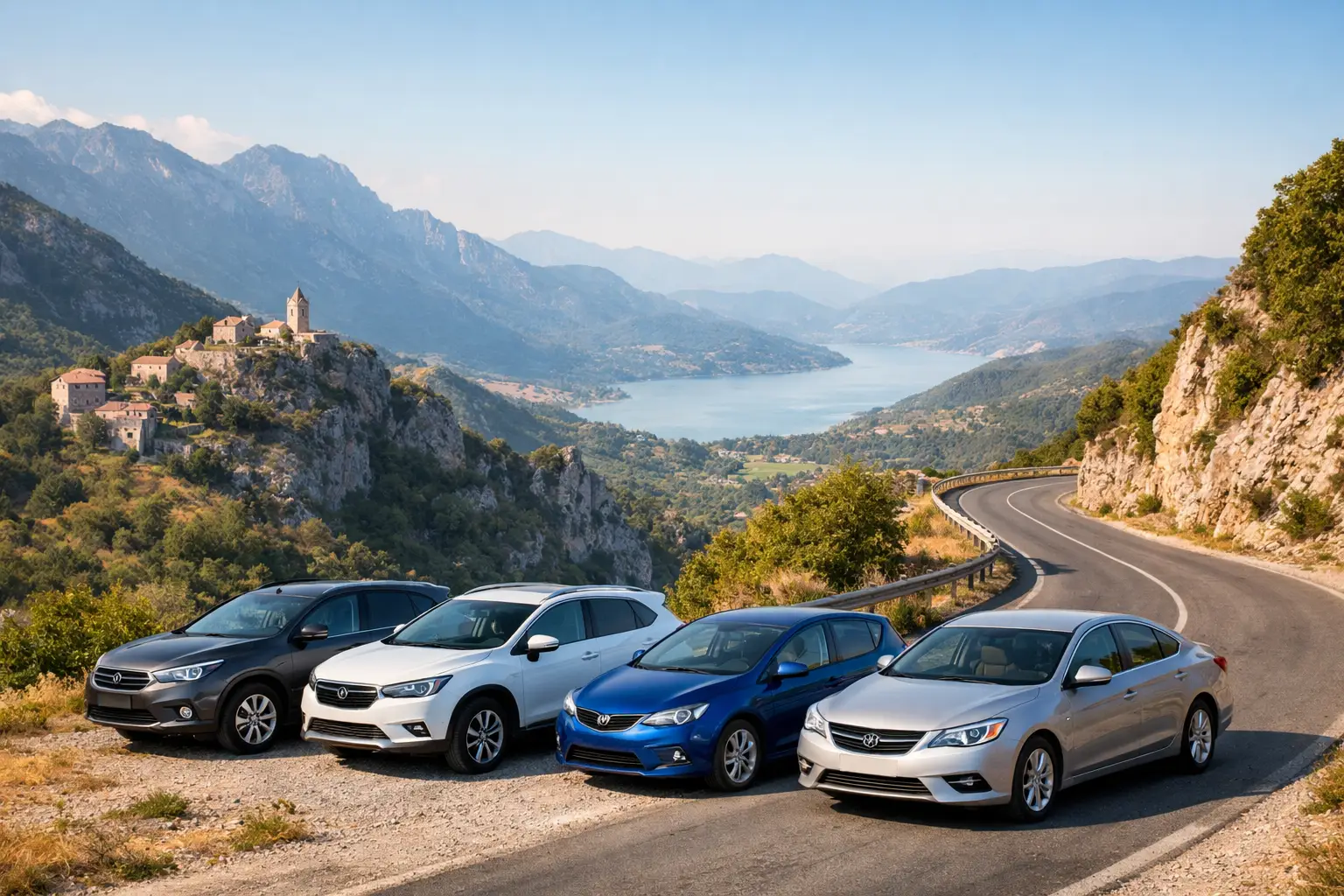
A road that looks easy on the map can change fast in the Balkans. One hour you are moving through a smooth highway stretch, and the next you are climbing a narrow hill road, passing through an old town with tight corners, or heading toward a waterfall parking area with rough pavement. That is why choosing the best cars for Balkan roads is less about badge or style and more about fit.
For most travelers, the right car comes down to three things: where you plan to drive, how many people are coming with you, and how much luggage you need to carry. A couple staying in a city and taking short day trips does not need the same vehicle as a family crossing borders with suitcases, strollers, and a full itinerary. The good news is that Balkan travel rewards practical choices. If the car matches the route, the trip feels much easier.
What makes the best cars for Balkan roads?
Balkan roads ask for flexibility. In larger cities and on major travel corridors, road conditions are often straightforward. But once you start adding scenic drives, smaller towns, border crossings, hillside routes, and tourist stops, the ideal car needs more than basic fuel economy.
Ground clearance matters more than many visitors expect, but it is not always the deciding factor. A compact car can be excellent if your trip is built around cities, paved regional roads, and short sightseeing drives. At the same time, suspension comfort, easy steering, and good visibility often matter just as much as size. On a long travel day, a car that feels calm and predictable is worth more than one that simply looks capable.
Automatic transmission is also worth considering, especially for visitors unfamiliar with local roads. In stop-and-go traffic, on uphill starts, and through older urban areas with tighter streets, an automatic reduces stress. Manual cars can still be a smart value choice, but convenience has real value when you are navigating new places.
Compact hatchbacks for easy city driving and short trips
If your plan includes airport pickup, hotel parking, and day trips to places such as Blagaj, Počitelj, or Kravica Waterfalls, a compact hatchback is often the smartest option. These are some of the best cars for Balkan roads when the focus is simple, affordable movement with easy handling.
A smaller hatchback works well because many Balkan destinations were not built around modern traffic. Streets can be narrow, parking can be tight, and old town areas often reward a car that is easy to place and easy to turn around. You will also spend less on fuel, which matters if you are covering several stops in a few days.
The trade-off is space. Two adults with light luggage are usually comfortable. Four adults with large suitcases are usually not. If your trip includes long transfers from the airport and several overnight stops, a small car can start to feel cramped quickly.
Compact sedans for comfort without excess size
For couples, solo business travelers, or small families, a compact sedan often hits the best balance. You get a smoother ride than many entry-level hatchbacks, more trunk space, and a little more comfort on longer regional drives. If your route includes Mostar, Sarajevo, Dubrovnik, or coastal and inland combinations, this category makes a lot of sense.
Sedans are especially useful for travelers who want a car that feels stable at highway speed but does not become difficult in towns. They are a strong choice for mixed itineraries where you want comfort without moving into SUV pricing or fuel use.
The main limitation is road access to rougher surfaces. A sedan is excellent for paved travel and common sightseeing routes, but if you expect poor parking access, uneven side roads, or more rural detours, an SUV may be the safer bet.
Small SUVs for mixed routes and family travel
If there is one category that suits the widest range of Balkan travel, it is the small SUV. For many visitors, these are the best cars for Balkan roads because they offer a practical middle ground - better visibility, more comfort over uneven surfaces, easier entry and exit, and enough cargo space for family travel.
This matters on day trips where the route is not difficult but the road quality can vary. You may drive on modern pavement, older regional sections, and busy tourist parking areas all in the same day. A small SUV handles those transitions well without feeling oversized.
Families also benefit from the extra room. Child seats, backpacks, and travel bags add up fast, and a vehicle that feels spacious on day one usually feels essential by day three. For travelers arriving through regional airports and planning flexible sightseeing rather than fixed tours, a small SUV offers freedom without too much compromise.
Still, not everyone needs one. If your travel is mostly urban, a compact sedan or hatchback may be easier and more cost-effective.
Larger SUVs for longer routes and more luggage
A larger SUV makes sense when comfort is the priority. This category suits families with several bags, travelers doing cross-border driving, and groups that want more legroom on longer journeys. If you plan to combine cities, scenic routes, and coastal or mountain stretches, the extra stability and cabin space can make a real difference.
Larger SUVs are also helpful when the weather is less predictable. Rain, changing road surfaces, and busy vacation traffic are easier to manage when the vehicle feels planted and visibility is strong. You are not choosing an off-road machine. You are choosing a comfortable travel vehicle for mixed Balkan conditions.
The trade-off is simple: they cost more to rent, use more fuel, and can be less convenient in old centers or narrow parking areas. For two travelers with small bags, it is often more car than necessary.
Station wagons for travelers who pack heavily
This category is often overlooked, but it can be one of the most practical. A station wagon gives you much of the luggage capacity people look for in an SUV, while keeping a lower ride height and often better fuel efficiency. For families and diaspora travelers carrying extra luggage, that can be the perfect combination.
Wagons work especially well for longer paved routes between cities and for travelers who want space without moving into a larger, taller vehicle. If your route is road-focused rather than terrain-focused, a wagon can be the smarter choice.
Its limitation is the same as a sedan's - less forgiveness on rough surfaces and less confidence if the route regularly includes broken edges or uneven access roads.
Vans for groups, airport runs, and family logistics
When you are traveling with six to nine people, the answer is straightforward. A van is usually the right tool for the job. It keeps the group together, solves luggage problems, and often costs less than splitting between two smaller vehicles once you factor in fuel, tolls, and parking.
For family events, group holidays, or airport pickups with a lot of bags, vans reduce friction. Everyone arrives together, and there is no need to coordinate multiple drivers or stops. This is especially useful for travelers who want to base themselves in one place and take independent day trips instead of following bus schedules or joining fixed tours.
The obvious trade-off is maneuverability. A van is less convenient in dense town centers and may not be ideal if your entire trip revolves around compact urban parking.
How to choose the right car for your route
The best choice depends on how you actually plan to travel, not on what looks best in photos. If you are staying local and taking easy day trips, go small and simple. If you are driving longer distances with family, extra luggage, or cross-border plans, prioritize comfort and space.
Think honestly about your luggage first. Travelers often underestimate how much room they need, especially when flying in with checked bags. Then think about parking. If your hotel or apartment is near a historic center, a smaller vehicle may save time every day. If your route includes several sightseeing stops and regional driving, a small SUV usually offers the easiest all-around experience.
For travelers based in Mostar, this is where flexibility matters most. A rental car lets you reach nearby highlights on your own schedule, spend more time where you want, and skip the limitations of bus timetables or group tours. That freedom is often worth more than choosing the cheapest category available.
A dependable rental car should make the trip feel easier from the first pickup to the final drop-off. Choose the car that fits the road, the people, and the pace you want, and the Balkans become much more comfortable to explore.